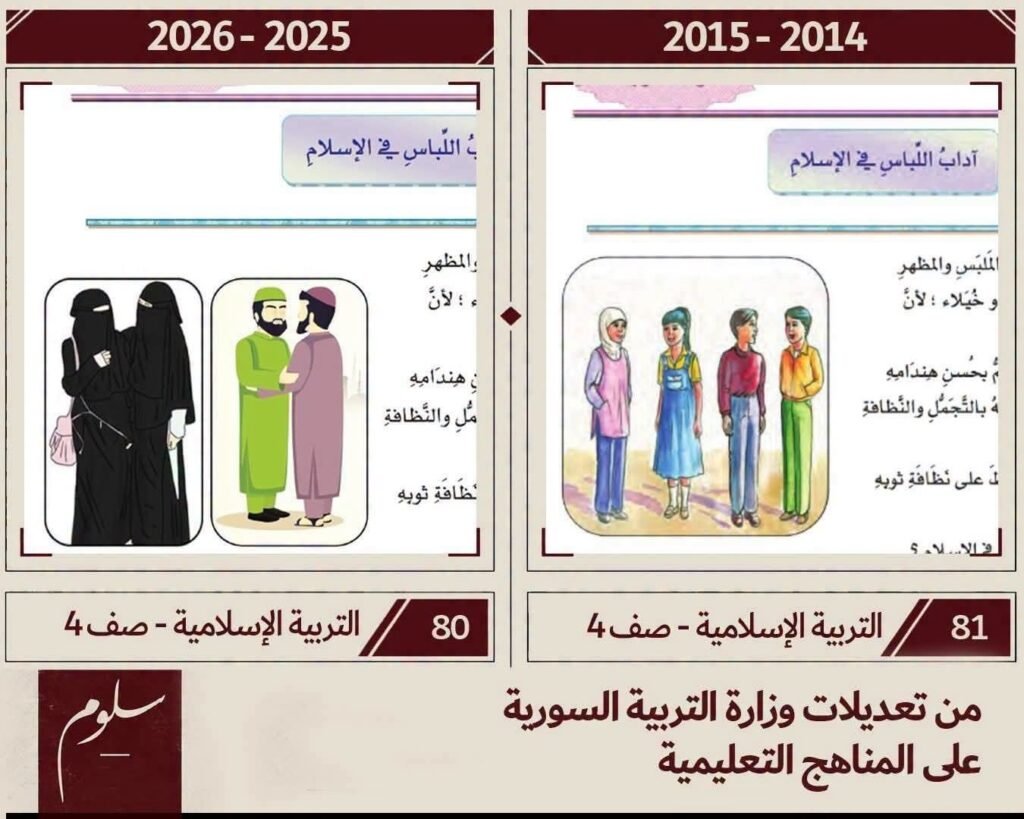
Concerns Over Educational Content Alterations
Rights Monitor Syria has voiced deep concern regarding circulating reports and criticisms concerning amendments made to Syrian educational curricula. The organization highlights growing questions about the nature of changes introduced to images and historical, political, and educational content, and their potential impact on religious, cultural, and intellectual pluralism within Syrian society. The platform asserts that schools serve as fundamental institutions for building awareness, fostering citizenship, and respecting human rights, rather than mere spaces for information transmission. Consequently, any curriculum modification must adhere to clear pedagogical, scientific, and human rights standards, avoiding exclusion or the imposition of a singular identity narrative.
Reports indicate criticism surrounding adjustments to textbook images and the removal or alteration of topics and historical figures related to politics, freedom, democracy, local administration, and specific Syrian historical events, including the issue of the Iskenderun Sanjak. Additionally, circulated images have sparked fears that increased religious manifestations in educational content may reinforce a single religious reference point. In response, the Ministry of Education denied implementing new modifications beyond those officially announced, stating that only one amendment was enacted since liberation, declared in January 2025. The ministry emphasized that curriculum development aims to preserve diversity and enhance respect for others, noting the completion of a national framework focusing on critical thinking and legal culture.
The Right to Education and Ideological Neutrality
Rights Monitor Syria stresses that the right to education extends beyond access to classrooms and textbooks, encompassing content that respects learner dignity and fosters critical thinking without ideological or religious coercion. Citing Article 26 of the Universal Declaration of Human Rights and Article 13 of the International Covenant on Economic, Social and Cultural Rights, the platform argues education must promote full personality development and mutual respect among diverse groups. Furthermore, Articles 29 and 30 of the Convention on the Rights of the Child mandate that education respect children’s cultural identity and protect minority rights to practice their religion and use their language.
Fears of Monolithic Religious Bias
The platform notes that while religious education materials are not inherently violations of human rights, concerns arise if content restricts freedom of thought or presents a single religious perspective as dominant. Selective removal of cultural or historical content without scientific justification threatens educational integrity and the right to balanced knowledge. Reducing national identity to a single religious affiliation risks weakening future generations’ understanding of Syria’s diversity and hindering equal citizenship.
Historical Integrity and Accountability
Allegations regarding the deletion of historical figures and texts require transparent verification. While curriculum reviews can be necessary for factual correction, they must follow published criteria and independent review to prevent ideological replacement of historical narratives. The organization holds the Ministry of Education accountable for ensuring content aligns with human rights standards and providing documentation for independent verification. It calls for clear administrative and legal accountability should discriminatory or arbitrary deletions be proven, while rejecting unsubstantiated accusations lacking sufficient evidence.
This report was produced by the HuMedia newsroom.