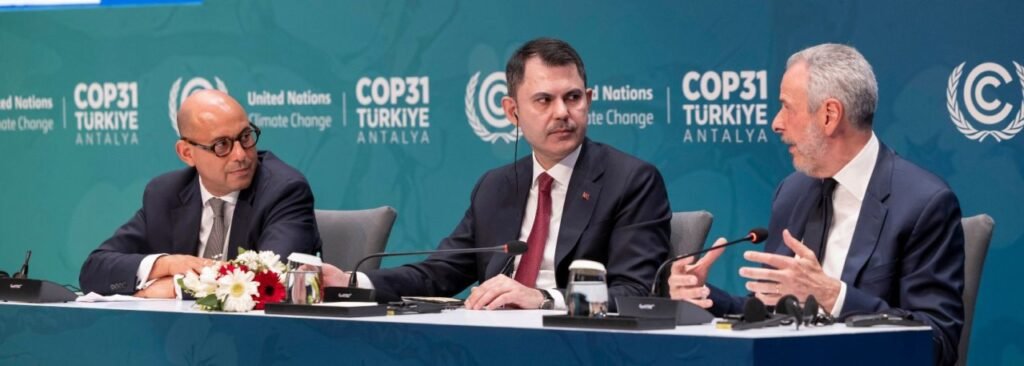
Paris–Geneva, 2 November 2026. Environmental human rights defenders (EHRDs) are essential to advancing climate responses grounded in human rights. Despite progress at the UNFCCC level in acknowledging their role, climate processes remain largely inaccessible and fail to adequately protect these individuals. The upcoming COP31 in Antalya, Turkey, presents a critical opportunity to rectify these deficiencies.
Strategic Recommendations for Key Negotiation Streams
An advocacy brief released today, coordinated by the Observatory (FIDH-OMCT) alongside over 100 global organizations, outlines challenges faced by EHRDs and proposes core recommendations for five major negotiation areas at COP31.
Gender Action Plan (GAP)
The GAP framework aims to integrate gender equality into climate action. The second phase (2026–2034), adopted at COP30, explicitly mentions “women environmental defenders” for the first time. Recommendations include prioritizing deliverables on women EHRDs with clear timelines and resources co-designed with defenders. Additionally, gender-responsive climate finance should be translated into accessible, grant-based funding for women-led and community-led organizations.
Global Stocktake (GST)
Launching at COP31, GST2 serves as a five-year review of progress toward the Paris Agreement’s goals. It is designed to ramp up ambition rather than allow backtracking. The brief urges that information collection explicitly gather evidence on how climate actions respect the rights of Indigenous Peoples, local communities, and EHRDs. Inputs from human rights defenders must be actively reflected, and safe, hybrid participation options must be guaranteed. Furthermore, GST2 outcomes should guide parties to integrate HRD protection and civic space into their next Nationally Determined Contributions (NDCs).
Action for Climate Empowerment (ACE)
ACE focuses on empowering society through education, training, awareness, participation, access to information, and cooperation. It is viewed as the most direct route to commitments on civic space within the UNFCCC. Recommendations call for activities to address the enabling environment for civil society and counter disinformation. HRDs and civil society organizations should be recognized as ACE implementers with dedicated funding. Parties are invited to report barriers such as attacks and criminalization through national focal points. An interactive workshop focused specifically on HRDs should be mandated, and coherence with the Belém GAP and regional agreements like Escazú and Aarhus must be strengthened.
Belém-Antalya Mechanism on Just Transition (BAM)
Agreed at COP30 and due for establishment at COP31, the BAM ensures transition pathways advance social justice, human rights, and livelihoods. Its governance and rules are yet to be finalized. The brief recommends anchoring the BAM’s purpose in human rights safeguards and establishing it as a constituted body under the UNFCCC. Governance processes must center meaningful participation and ensure fair, inclusive transitions rooted in human rights.
This report was produced by the HuMedia newsroom.