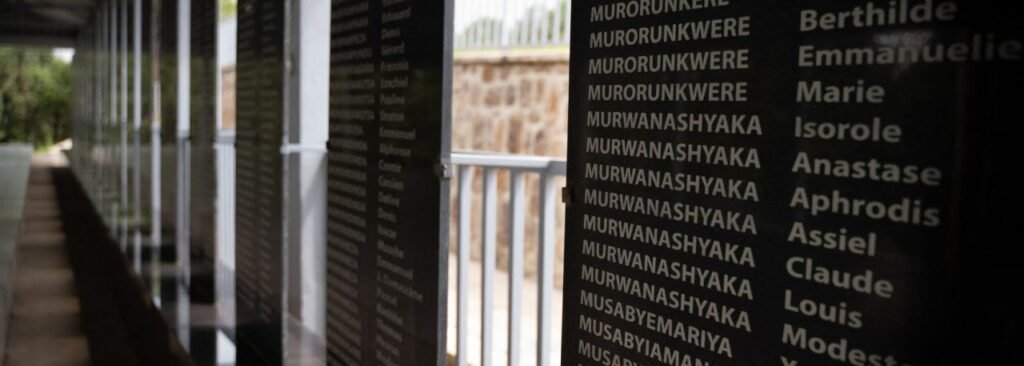
On Wednesday, 9 September 2026, the Court of Cassation, the highest court in France, upheld the dismissal of the case on the extermination of almost a thousand Tutsi in Bisesero in western Rwanda, between 27 and 30 June 1994. French troops from Operation Turquoise, stationed nearby, had failed to come to their aid. In 2005, some survivors, assisted by the International Federation for Human Rights (FIDH), the French Ligue des droits de l’Homme/droits humains, and Survie, filed a complaint for complicity in genocide.
Rejection of Investigative Measures
Paris, 10 September 2026. The Court of Cassation upheld the Paris Court of Appeal’s rejection of a request for further investigative measures to uncover any potential liability in France and argued that it fell within the “sovereign discretion of the Investigating Chamber” which had noted the “thorough nature of the investigation conducted” by the investigating magistrates. The parties civiles pointed to the fact that the Paris Court of Appeal, in its decision, held that the ” omissions to be a breach of duty to act requires, in order to be punishable […] an intention to associate oneself with the conduct of the principal offender […]” , contravened the jurisprudence of the Court of Cassation, which does not require the accomplice to share the criminal intent. In its judgment, the Court of Cassation reaffirmed its established jurisprudence, but failed to apply it.
Criticism from Legal Representatives
According to Raphaël Doridant (Survie) , ” The Court of Cassation upheld the termination of the investigation despite the fact that crucial archives containing orders issued from Paris were not declassified and disclosed to the judicial authorities. Neither Admiral Jacques Lanxade, General Christian Quesnot, historian Vincent Duclert, nor Hubert Védrine were questioned. No attempt was made to establish liability in Paris, despite the Court of Cassation noting that, ’it was not for the military personnel on the ground to act without receiving a specific order from their chain of command, namely, from the Ministry of Defence’ “.
According to Patrick Baudouin, legal counsel for FIDH and LDH , ” We expected the Court of Cassation to draw the necessary conclusions, on the basis of its own jurisprudence on complicity, and to overturn the Court of Appeal’s ruling on this matter. Indeed, we never argued that the French military shared the intent of the perpetrators of the genocide. We simply noted that, despite being mandated to put an end to the massacres, they failed to do so, for reasons that remain unknown to us “.
Future Legal Actions
The survivors of the Bisesero killings and the organisations assisting them reserve the right to bring the matter before the European Court of Human Rights, given that the fundamental rights of the survivors may have been violated: an incomplete investigation; a failure to establish liability, particularly as regards the military and the official chains of command; denial of access to crucial archives; and incessant obstruction to the establishment of the truth.
This report was produced by the HuMedia newsroom.