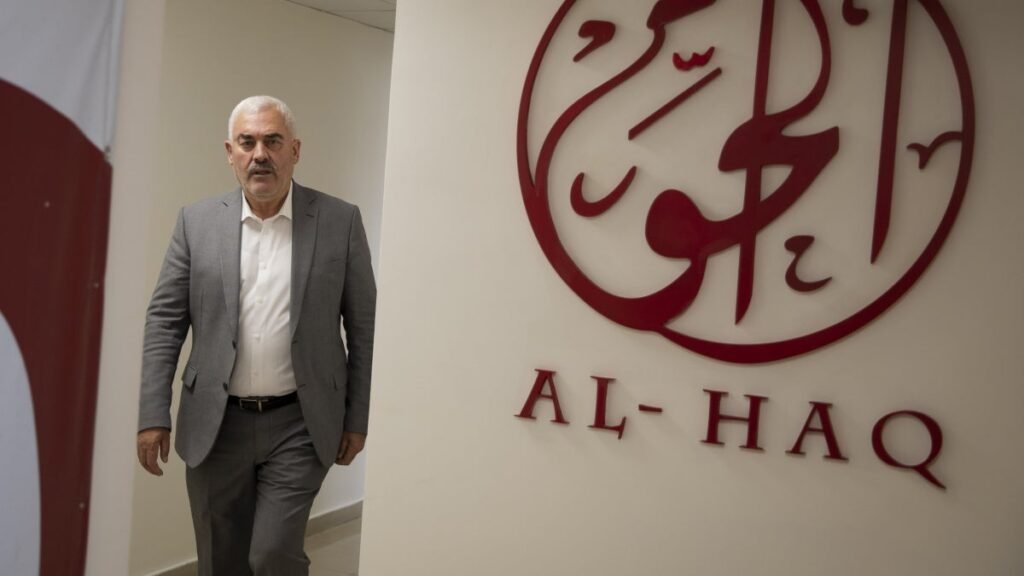
Israeli authorities prevented Shawkat Jabarin, the executive director of the prominent Palestinian human rights organization Al-Haq, from traveling abroad on November 13, 2026. The travel ban targets one of the most visible defenders of civil liberties in the occupied West Bank, signaling an intensification of pressure against local non-governmental organizations.
Context of Restriction
Jabarin’s inability to leave the territory occurs amidst a broader crackdown on Palestinian civil society. Al-Haq, alongside the Palestinian Center for Human Rights and the Gaza Center for Rights and Law, continues its legal advocacy despite facing significant external pressures. These organizations have been subjected to United States sanctions due to their cooperation with the International Criminal Court. This diplomatic friction has drawn international legal challenges, including a lawsuit filed by Human Rights Watch and three other NGOs in a US federal court on August 11, seeking to overturn the restrictive measures.
Condemnation from International Bodies
The restriction has drawn sharp criticism from global watchdogs. Balqees Al-Jarrah, the Middle East and North Africa director at Human Rights Watch, characterized the travel ban as a retaliatory measure designed to punish those advocating for victims of serious crimes. She stated that the prohibition represents the latest escalation in Israel’s campaign to silence Palestinian rights organizations that document violations of international law and pursue accountability.
Al-Jarrah emphasized that governments must take immediate action to support and protect Palestinian civil society. She argued that ensuring these groups can continue their vital work is essential for maintaining standards of justice and transparency in the region. The directive effectively isolates key figures who play a central role in monitoring military operations and settlement activities in the West Bank.
Ongoing Legal Advocacy
Despite the administrative hurdles and political hostility, Al-Haq remains active in its mission. The organization focuses on providing legal assistance to Palestinians affected by military orders and home demolitions. The travel ban adds to a growing list of restrictions placed on activists, lawyers, and journalists in the region. Critics argue that such measures are intended to disrupt the coordination of legal strategies and hinder the ability of defenders to attend international forums or seek medical treatment abroad.
The incident highlights the increasing difficulty faced by human rights workers in the occupied territories. With domestic resources stretched and international funding complicated by geopolitical tensions, the operational capacity of these groups relies heavily on their ability to communicate across borders. Preventing leaders like Jabarin from traveling serves to fragment these networks and limit their reach beyond the immediate conflict zone.
This report was produced by the HuMedia newsroom.