Amnesty International has called for an urgent investigation into a series of drone attacks launched by the Rapid Support Forces (RSF) against civilian areas in Al-Ubayyid, North Kordofan state, Sudan. The organization’s findings indicate that these strikes, which targeted residential zones and critical infrastructure, resulted in the deaths of at least 37 civilians and injured 10 others between June and August 2026. Amnesty asserts that these actions constitute war crimes due to their indiscriminate nature and impact on non-combatants.
Pattern of Indiscriminate Strikes
The investigation documented nine distinct drone attacks in and around Al-Ubayyid. Three strikes hit residential neighborhoods, while four targeted essential civil infrastructure, including the Al-Ubayyid power station, fuel stations, and the main market. Two additional incidents involved vehicles moving along roads. Witnesses reported hearing or seeing drones moments before the explosions occurred. Crucially, the investigation found no evidence of military objectives near the struck sites at the time of the attacks.
The city remains under the control of the Sudanese Armed Forces and allied militias. The RSF initiated its first drone campaign against Al-Ubayyid in October 2025, escalating significantly in June 2026 as it prepared for a potential ground offensive. This surge raised fears among residents reminiscent of the atrocities committed during the capture of El Fasher a year prior.
Specific Incidents and Civilian Toll
Among the most severe incidents was a strike on June 10, 2026, at the Adil Cemetery in northwest Al-Ubayyid. The attack killed at least five people, including Ahmad Eissa and his brother Mutasim Ahmed, who were attending the funeral of their relative, Al-Nour Ahmed Eissa, who had been killed earlier that day in a separate strike. A 19-year-old mosque call-to-prayer announcer suffered severe injuries in this incident.
On June 11, a drone strike on the Airport neighborhood home killed at least nine civilians. A 41-year-old female doctor described hearing two large explosions around 2:20 AM. After evacuating her children, she witnessed a second bomb dropped by a drone kill her husband, her uncle, and seven neighbors. Another attack on August 12 targeted a branch of the Agricultural Bank near the main market, killing two civilians and injuring five others, including an internally displaced woman who sustained shrapnel wounds to her knee.
Infrastructure Damage and International Response
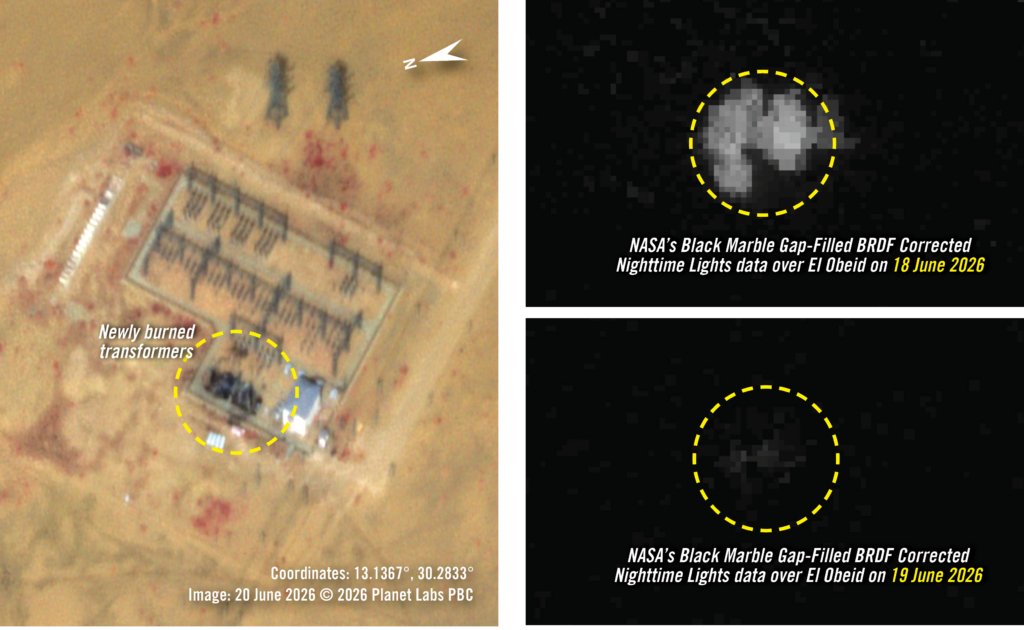
A strike on June 18 destroyed the main power station, causing a city-wide blackout confirmed by satellite imagery showing burn marks and NASA data indicating reduced nighttime lighting. While no casualties were reported from this specific infrastructure attack, humanitarian agencies noted it exacerbated the ongoing crisis.
Agnes Callamard, Secretary General of Amnesty International, stated that the use of advanced weaponry to disrupt life-saving services marks a new phase in the conflict. She urged the UN and African Union to deploy protective forces immediately. Amnesty highlighted previous reports linking the UAE to supplying the RSF with drones, including Chinese-made Wing Loong II and FH-95 models. Callamard demanded an expansion of the arms embargo on Darfur to cover all of Sudan, specifically listing drones as prohibited military equipment.
In response to Amnesty’s letter dated October 8, the RSF denied responsibility on October 24, blaming the Sudanese Armed Forces without providing evidence. However, the RSF announced plans to form a “special investigation committee” to review incidents involving civilian casualties and property damage, pledging to enhance compliance with target verification procedures.
This report was produced by the HuMedia newsroom.