Syria and the World Bank announced on October 18 the creation of the “Credit Facility for Recovery and Reconstruction in Syria,” commonly known as START. The World Bank will administer this new vehicle, which aims to pool donor contributions and private investments to rehabilitate critical infrastructure, restore public services, strengthen government institutions, and finance reforms deemed priorities by the Syrian government.
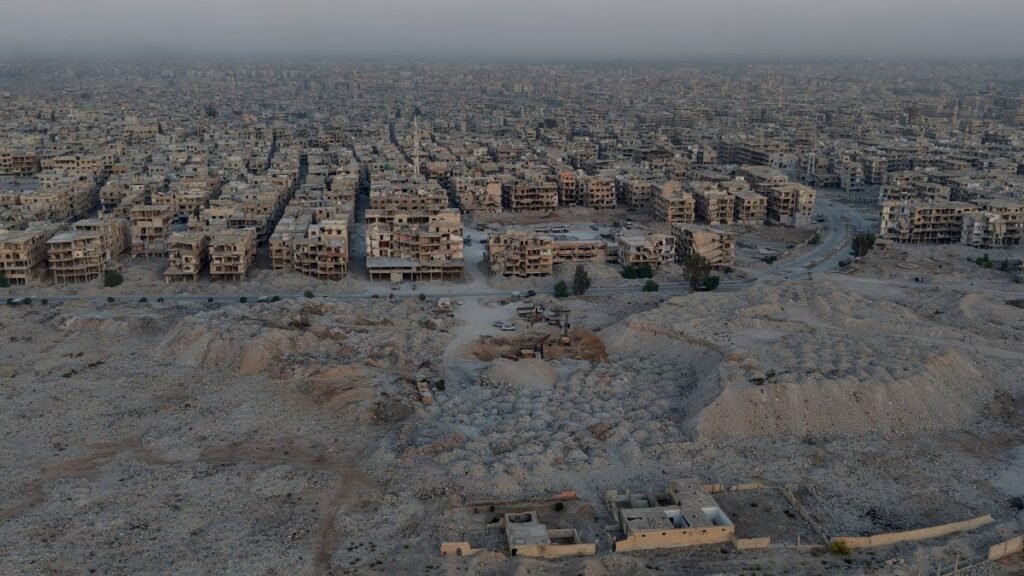
The World Bank estimates that post-conflict reconstruction in Syria will require approximately $216 billion. Early commitments have already been secured from international partners, with Norway pledging NOK 90 million (equivalent to $9.6 million) and the Netherlands contributing €15 million (approximately $16.8 million). According to the Syrian Arab News Agency (SANA), the START fund will initially focus its resources on infrastructure, health, and education sectors.
Operations under the START framework will adhere to World Bank policies, which include specific standards regarding stakeholder engagement, land tenure, and grievance mechanisms. However, SANA noted that these standards currently apply only to projects directly financed by the fund, while broader governance arrangements remain under development. This structural gap presents a significant opportunity to expand human rights safeguards across the wider reconstruction landscape in Syria, extending beyond the immediate scope of START-funded initiatives.
Existing regulations governing reconstruction do not mandate consultation with affected populations—including tenants, informal occupiers, and displaced persons—prior to project approval, nor do they establish formal mechanisms for resolving reconstruction-related disputes. The consequences of implementing policies without such consultation have become increasingly evident. In March, local authorities in Damascus proposed granting foreign companies land in the districts of Jobar and Qaboun in exchange for financing and executing reconstruction projects. Under this proposal, homeowners in regulated areas would receive new units at half the size of their original properties, while landowners in informal settlements would retain only 30% of their land. The plan included no provisions for tenants.
Experts argue that the World Bank and donors supporting START must prioritize establishing a human rights-compliant framework for housing, land, and property, including an independent dispute resolution mechanism. They further recommend requiring human rights impact assessments before funding any projects involving unresolved ownership claims. Priority should also be given to restoring services in areas where residents are returning. Additionally, any support for private sector providers in health or education should be subject to enforceable requirements regarding affordability, quality, and non-discrimination.
Yasser Burhani, the Minister of Finance, stated that the current priority is delivering “tangible results for the Syrian people.” He emphasized that the true test lies in whether the population has a voice in decisions concerning their land and whether they can effectively exercise their rights to health, education, and adequate housing.
This report was produced by the HuMedia newsroom.