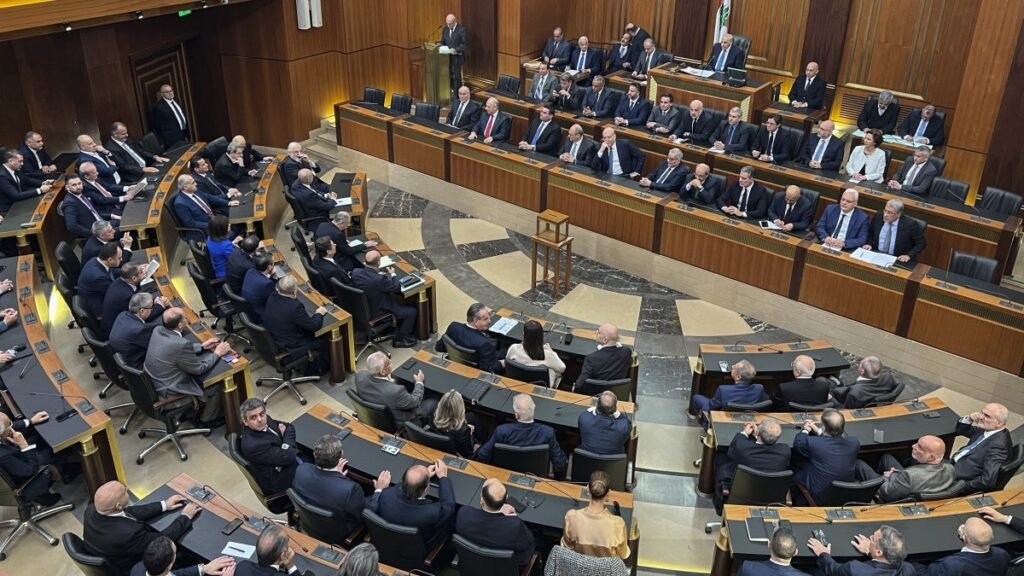
Human Rights Watch has called on the Lebanese Parliament to amend the recently enacted media law to eliminate all legal provisions that restrict the right to freedom of expression. The organization emphasized that while the new legislation marks significant progress, it retains critical clauses that threaten journalists and activists with criminal prosecution.
The Parliament approved the media law on August 11, 2026, following sixteen years of deliberations. The legislation introduces notable improvements, including the abolition of pre-trial detention for opinion-related crimes committed through media or electronic means. It also guarantees the right to establish electronic media platforms or publish print materials without prior state licensing. Furthermore, the law restricts the jurisdiction of military courts over expression-related crimes committed online or via media outlets. Additional provisions enhance media independence by prohibiting unjustified interference in journalistic work, strengthening the right of media workers to join unions, protecting source confidentiality, and limiting the ability of security agencies to search or seize journalists’ electronic equipment and documents.
However, Human Rights Watch identified Article 104(b) as a major obstacle. This provision criminalizes the “deliberate fabrication of falsehoods and the dissemination of harmful news,” carrying a penalty of up to three years in prison. The organization warned that vague terms such as “harmful news” continue to expose journalists to arbitrary prosecution. Despite the decriminalization of defamation in certain cases within the new law, existing texts in the Lebanese Penal Code remain applicable. These provisions criminalize defamation against foreign states, their leaders, armies, flags, or emblems, as well as defamation against the President of the Republic, state institutions, and the army, imposing prison sentences of up to two years. Additionally, articles in the Military Justice Law still criminalize the public insult of the flag or army, punishable by up to three years in prison.
In response, ten MPs submitted a new bill on October 5, proposing amendments to address these problematic articles. The proposed changes would repeal Article 104(b) and render the relevant Penal Code and Military Justice Law provisions inapplicable to cases covered by the media law, including online and media expression. The amendments would also restrict the power of security forces to interrogate journalists regarding expression-related crimes, confining this authority to the Public Prosecution.
Ramzi Qais, Lebanon researcher at Human Rights Watch, stated, “Given the history of government officials and powerful figures abusing Lebanese laws to crack down on journalists, activists, and artists, the Parliament must act to prevent further violations.” He added that civil society has fought for years to strengthen freedom of expression and press freedom, noting that approving the proposed amendments would be a landmark achievement. Human Rights Watch concluded that the Parliament should fully abolish all defamation and insult-related texts, transferring all such cases, including offline expression, to the civil judiciary in accordance with international human rights standards.
This report was produced by the HuMedia newsroom.