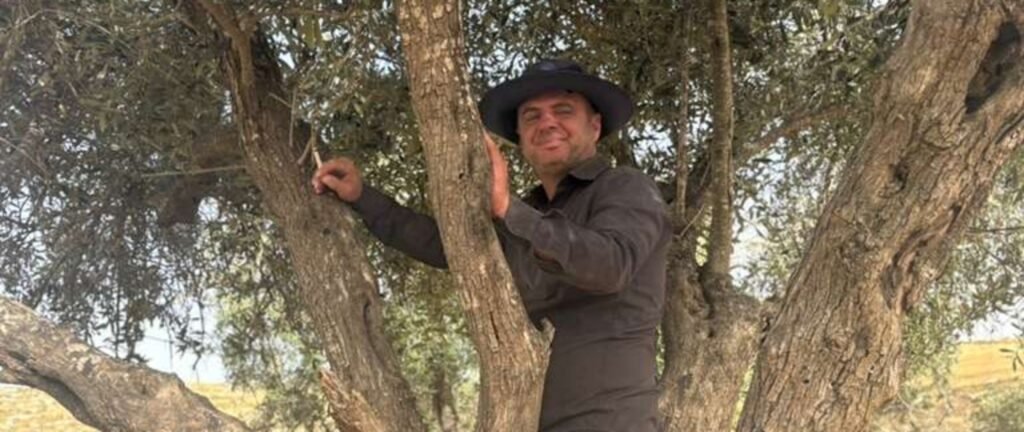
Abu Sulaiman serves as the president of the local council for Zanuta, a village situated in the hills south of Hebron in the southern occupied West Bank. Three years ago, he was forcibly displaced from Zanuta alongside all 250 residents due to an ethnic cleansing campaign launched by Israel targeting Palestinian Bedouin and pastoral communities in the region.
“Zanuta, my village, never leaves my mind,” Abu Sulaiman stated. He currently resides in Al-Zahiriya, located within sight of Zanuta, yet separated by Israeli settlers, military checkpoints, settlement outposts, and soldiers. He attributes this separation to a lack of political will among authorities to implement court orders. Every time he leaves his current home, his gaze turns toward Zanuta, which remains vividly present before his eyes. He reports that the village appears in his dreams almost every week.
The family lived in Zanuta for generations, building lives rooted in the land. In 2020, settlers arrived claiming ownership of the land where the community had been born and raised. Before their displacement, the villagers lacked basic services such as proper roads or electricity, relying instead on solar panels provided by a local non-governmental organization. Despite these hardships, they maintained a simple, dignified life centered on sheep herding, agriculture, and water sources.
Tensions escalated when settlers began seizing grazing lands, harassing residents, controlling water wells, and attacking livestock. In 2021, an illegal pastoral outpost named Meitarim Farm was established just one kilometer from Zanuta. Violence against settlers, supported by the state, intensified sharply after October 7, 2023, becoming more brutal across the West Bank, particularly in Area C, including Zanuta and Masar Yatta.
Residents did not remain passive. They pursued legal action and obtained rulings from the Israeli Supreme Court ordering the military and police to facilitate their return and protect them from settler violence. However, the Israeli army failed to execute these decisions. The Meitarim outpost remains the primary obstacle to their return, serving as the launchpad for most attacks while the military stands idle.
Displacement has inflicted severe psychological and economic trauma. Children who once played freely with sheep now face nightmares and fear armed settlers patrolling in vehicles. Elderly women, including Abu Sulaiman’s 73-year-old mother, weep constantly at memories of the village. Families have lost jobs and shelter for their animals, forcing some to sell sheep to buy food. Abu Sulaiman’s cousin, previously a provider for his family of eight, suffered severe depression and stopped working entirely.
Amnesty International recently reported that this ethnic cleansing is not merely the act of rogue settlers but an integral part of organized state policy. Abu Sulaiman urges the world to pressure Israel to respect its own court decisions and ensure accountability. He calls for continuous international protection for Area C communities, which constitute approximately 60% of the West Bank’s area, and invites media and diplomatic missions to visit the region to increase pressure on the Israeli government.
This report was produced by the HuMedia newsroom.