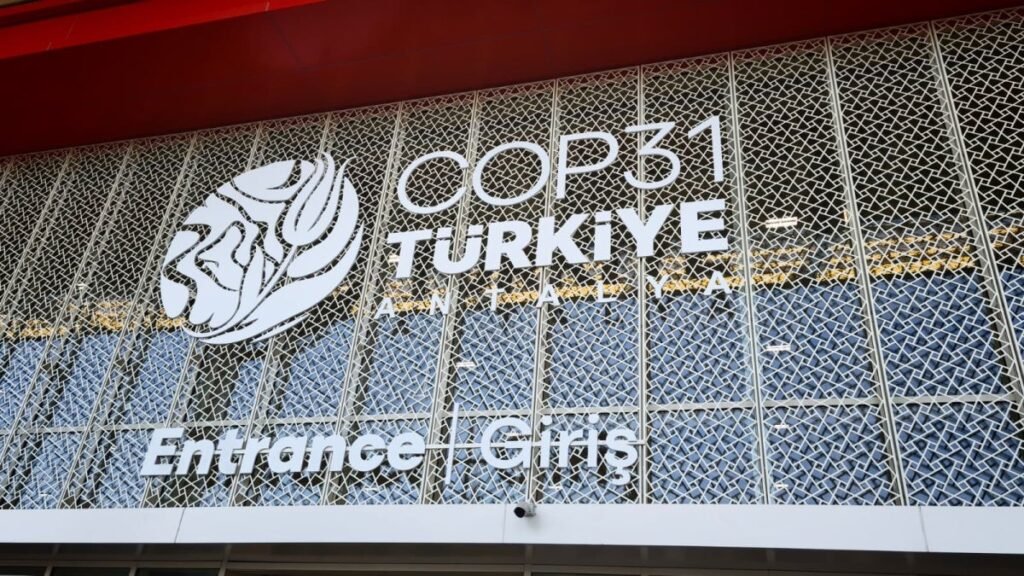
Human Rights Watch has condemned Turkey’s continued expansion of coal operations and its failure to establish a phase-out plan for fossil fuels, arguing that these actions undermine the credibility of its role as a co-host of the United Nations Climate Change Conference (COP31). The conference is scheduled to take place in Antalya on November 11 and 12, where world leaders are expected to accelerate global climate action and fulfill their commitments.
Legal Challenges and Licensing Moves
In July 2026, the Turkish government appealed a June court ruling that had rejected plans to add two new units to the Afşin-Elbistan power station in Kahramanmaraş province. Simultaneously, authorities initiated licensing procedures to increase the capacity of an existing coal-fired plant in Çanakkale province in northwestern Turkey. These moves occurred despite local opposition and legal setbacks regarding the Afşin-Elbistan expansion.
Deniz Bayram, a researcher for Europe and Central Asia at Human Rights Watch, stated that while the court’s cancellation of the Afşin-Elbistan expansion appeared to be a turning point in local efforts to halt coal projects, the government’s determination to expand coal usage during the hosting of COP31 sends the wrong message. She emphasized that this approach takes the country in the wrong direction regarding climate change mitigation and the protection of citizens’ right to health.
Court Rulings and Expert Findings
Two administrative courts in Kahramanmaraş issued rulings rejecting the expansion plans in June following five separate lawsuits filed by local governments, civil society organizations, and individuals. Human Rights Watch submitted an amicus curiae brief in one of the cases brought by the Turkish Medical Association in June 2025. The brief relied on findings from a 2024 report documenting serious public health and environmental concerns related to the plant’s current operation.
The Third Administrative Court in Kahramanmaraş annulled the project based on two expert reports commissioned by the court. The judges cited these reports, which highlighted inadequate air quality assessments and superficial evaluations of chronic exposure to air pollution. The experts noted that the environmental impact assessment failed to consider cumulative health effects on vulnerable groups, such as children, the elderly, and those with chronic diseases. Additionally, the reports indicated that participants in public consultations were manipulated, with most attendees opposing the expansion.
National Context and Global Comparison
In 2025, coal accounted for 33.9 percent, or 120.86 billion kilowatt-hours, of Turkey’s total electricity generation. Turkey remains one of only four European countries, alongside Poland, Kosovo, and Bosnia and Herzegovina, that have not committed to phasing out coal or setting a timeline for ending coal-fired power generation. Although the government announced a National Energy Plan on November 5 aiming to enhance energy independence and electrification by 2040, it lacks concrete targets for fossil fuel phase-out.
Human Rights Watch also pointed to Australia, another co-host of COP31 and a major coal exporter, which is similarly expanding fossil fuel use domestically. This parallel highlights a growing gap between international climate rhetoric and domestic energy policies in both host nations. Bayram urged Turkey and Australia to adopt firm policies to halt new fossil fuel projects and establish clear timelines for phasing out existing coal plants, suggesting that canceling licensed projects could be a significant step toward this goal.
This report was produced by the HuMedia newsroom.