Amnesty International has called on Iraqi authorities to guarantee full legal due process rights for more than 5,700 detainees transferred from north-eastern Syria, emphasizing the urgent need to protect the rights of children among them. This appeal comes as the group approaches a scheduled court session on October 5. The individuals are facing charges related to alleged membership in the armed group known as the Islamic State (IS), following their transfer to Iraq between late January and February 2026.
Demographics and Legal Framework Concerns
The total number of transferred individuals stands at 5,704, representing citizens from 67 countries. This demographic includes 16 Arab nations, with thousands of Syrians and hundreds of Iraqis, alongside 19 European Union member states and 32 other foreign nationalities. Crucially, the group comprises at least 157 minors under the age of 18. Amnesty International highlighted that these trials will proceed under Iraq’s Penal Code No. 111 of 1969 and Anti-Terrorism Law No. 13 of 2005. The organization has long criticized the anti-terrorism framework for its overly broad definitions of terrorist activity and its imposition of the death penalty for crimes involving mere membership or support of a group.
Warnings Against Coerced Confessions
Grazia Cericola, Deputy Director of the Middle East and North Africa Regional Office at Amnesty International, stated that launching these trials places a massive responsibility on Iraqi authorities to adhere to international law and human rights standards throughout all judicial stages. While acknowledging the security challenges and logistical burden on the Iraqi legal system, she asserted that justice cannot be achieved through flawed procedures, coerced confessions, or mass trials. She insisted that every detainee must receive a fair trial based strictly on individual criminal responsibility; otherwise, they must be released.
Cericola noted that Iraqi courts have previously relied excessively on confessions extracted under torture and ill-treatment. Amnesty International has documented widespread patterns where detainees transferred from north-eastern Syria were subjected to severe beatings, electric shocks, painful postures, and strangulation to force self-incriminating statements. The organization urged the Supreme Judicial Council to exclude any evidence obtained through torture and to conduct comprehensive investigations into human rights violations. Defendants must be promptly enabled to access qualified lawyers and interpreters, and hearings must be public.
Child Protection and Death Penalty Risks
The presence of at least 157 children underscores the necessity of a response centered on child rights and strict adherence to international juvenile justice standards. Many children were originally detained in north-eastern Syria in operations lacking individual case differentiation, including boys as young as 11 separated from their mothers in detention camps. International standards dictate that children associated with armed groups should primarily be treated as victims of human rights abuses. Prosecution for acts committed under the age of 18 should be an absolute exception, reserved only for credible allegations of serious violence or international crimes, with non-custodial measures preferred.
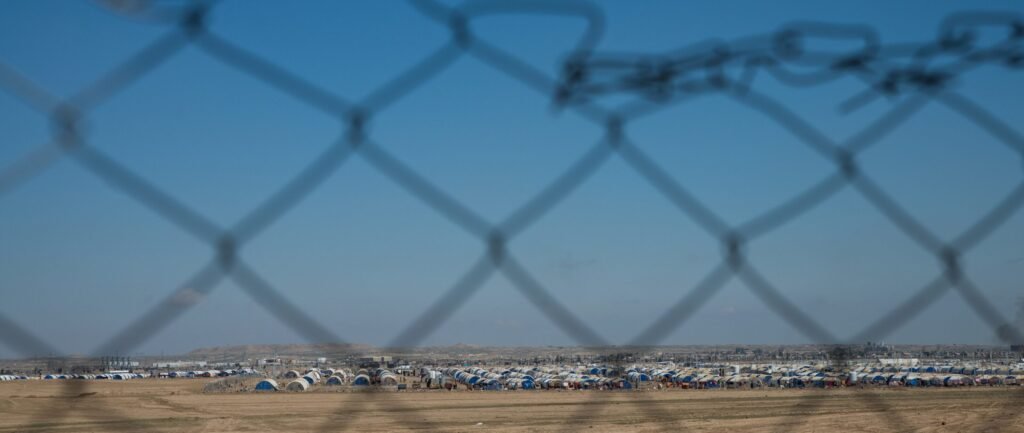
This development follows years of arbitrary, indefinite detention of tens of thousands in poor conditions in north-eastern Syria after the military defeat of IS. Previous reports documented overcrowding, inadequate food, lack of healthcare, and the spread of infectious diseases like tuberculosis, leading to hundreds of deaths. Meanwhile, Iraq continues to execute dozens annually. In 2024, Iraqi courts issued over 200 death sentences, with at least 63 executions carried out, marking a fourfold increase from the previous year. Although execution rates briefly declined following a general amnesty law in early 2025, judicial executions resumed in early 2026, raising significant international concern regarding systemic due process violations.
This report was produced by the HuMedia newsroom.