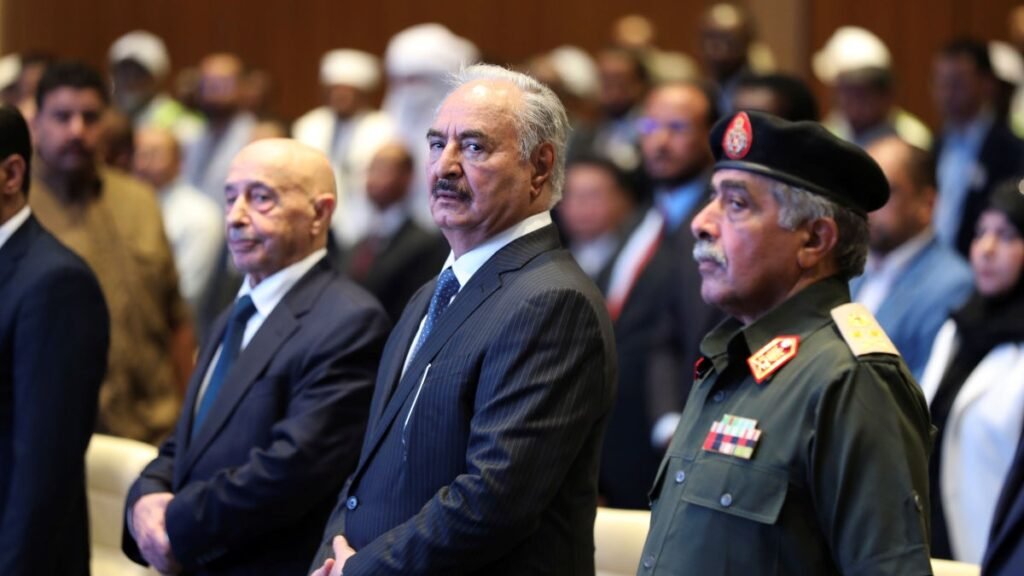
Human Rights Watch stated on Monday that the Libyan National Army, which controls eastern and southern Libya, has executed at least 31 individuals since late August 2026 following highly unfair military trials. These executions mark the first known instances of capital punishment in Libya since 2010. Additionally, at least 50 other detainees held at the Qarnada military prison face imminent execution.
On August 23, the Military Prosecutor for the Libyan National Army announced the shooting execution of 10 individuals convicted of murder and terrorism-related crimes. Human rights organizations have documented a total of 31 executions as of September 10. The organization called on the army, led by General Khalifa Haftar, to immediately halt all executions and impose a moratorium on the death penalty.
Bassam Khawaja, deputy Middle East and North Africa director at Human Rights Watch, stated that the army executes individuals after secret trials based on alleged confessions extracted through torture. He noted that the Libyan Supreme Court itself had indicated that civilians should not be tried by military courts. “Every execution carried out under these conditions is an irreversible injustice,” Khawaja said, urging governments with influence over the army to pressure its leadership to prevent further executions.
Many of those executed were arrested in Derna and Benghazi during or after the armed conflict between the Libyan National Army and rival armed groups between 2014 and 2018. Between 2018 and 2021, military courts in eastern Libya sentenced hundreds of civilians to death in secret trials targeting critics and opponents. According to Amnesty International, many judgments relied on confessions allegedly obtained by the Internal Security Agency, an armed group affiliated with the army.
In 2019, a higher military court reduced at least two death sentences to life imprisonment on appeal, yet the defendants were executed this year. These executions proceeded despite a ruling by the Constitutional Chamber of the Libyan Supreme Court in November 2025, which declared Law No. 4 of 2017 unconstitutional regarding granting military courts jurisdiction over civilians in terrorism and state security cases.
Local human rights groups reported that the military trials violated due process rights. Proceedings were held secretly without prior notice, barring families, journalists, and rights organizations from attendance. Several defendants were denied the right to choose their lawyers, while others with chosen counsel were prevented from visiting them before and during the trial. Judgments were issued without written, reasoned decisions provided to the accused or their lawyers.
Trying civilians in military courts violates the right to a fair trial under international human rights law. In eastern Libya, military prosecutors and judges are linked to the Libyan National Army or allied armed groups, lacking independence. Families were not notified of execution dates, and authorities refused to hand over bodies, requiring relatives to identify the dead before burying them without family presence.
The United Nations and the internationally recognized Government of National Accord condemned the executions. Human Rights Watch emphasized that governments funding and legitimizing the Libyan National Army must use their influence to stop the killings. The organization urged Libyan authorities in both east and west to restrict military courts to military offenses only, review civilian cases, and provide effective remedies including release or transfer to civilian courts.
This report was produced by the HuMedia newsroom.