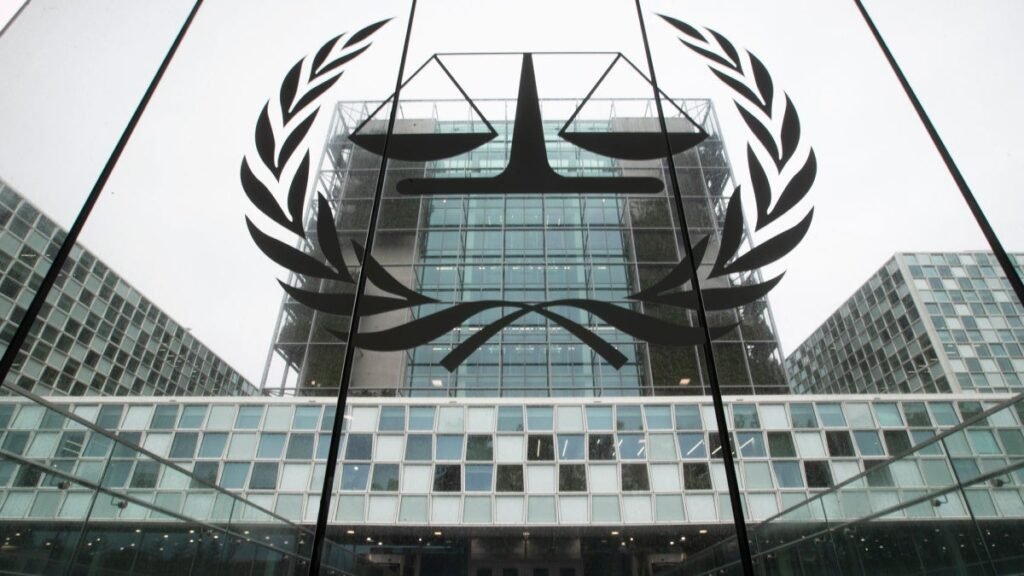
Human Rights Watch has stated that a recent ruling by the International Criminal Court (ICC) endangers the pursuit of justice for victims of grave crimes committed in Afghanistan. On November 12, 2026, a Pre-Trial Chamber decided to close the case concerning alleged crimes perpetrated by United States forces, Afghan government troops, and other actors prior to the Taliban’s seizure of power in August 2021. The court cited a lack of activity regarding the file as the justification for this closure.
The following day, the Office of the Prosecutor appealed the decision and requested a stay of execution for the closure order. Human Rights Watch and other organizations have documented years of war crimes and crimes against humanity involving the Taliban, ISIS-Khorasan (ISIS-K), Afghan government forces, and US military and CIA personnel. Liz Evenson, Director of International Justice at Human Rights Watch, emphasized that victims of these international crimes have faced significant barriers to justice, and the judges’ decision threatens to exacerbate obstacles to future accountability for US and Afghan government forces.
In its initial 2017 request to open an investigation, the Prosecution highlighted alleged crimes by US forces and the CIA, including torture, cruel treatment, rape, and other sexual violence under official policy. Regarding Afghan government forces, allegations included torture, sexual violence, enforced disappearances, and extrajudicial killings. For the Taliban, crimes involved attacks on civilians, political and gender-based persecution, and the use of child soldiers. No party demonstrated genuine willingness to achieve justice during the twenty-year conflict.
In March 2020, ICC judges authorized the Prosecutor to investigate all alleged crimes within the Court’s jurisdiction in Afghanistan since May 1, 2003, and on the territory of another state party since July 1, 2002, if sufficiently linked to the armed conflict. The investigation was temporarily suspended while considering Afghanistan’s deferral request, but judges concluded in 2022 that previous domestic proceedings covered only a very limited part of the potential ICC case.
Since resuming investigations in 2022, the Prosecution indicated it would prioritize crimes by the Taliban and ISIS-K, with lower priority for Afghan security forces and US individuals. In November 2024, six states referred a situation regarding crimes against women and girls after the Taliban’s 2021 takeover. Investigations resulted in four arrest warrants for senior Taliban officials, including the Supreme Leader, for gender-based persecution.
Victims and NGOs criticized the focus on Taliban violations as creating double standards. Earlier in 2026, a related ruling split the Afghanistan case opened in 2020 into two: one covering Taliban violations since August 2021, and the other covering remaining aspects. The November 12 closure applied only to the latter. Judges relied on a new rule allowing case closure if the Prosecution notifies it does not expect further investigative or prosecutorial activities. The Prosecution argued it never submitted such a notice and had explicitly stated it did not intend to do so. The ruling comes amid increasing pressure from the US government, which has threatened to dismantle the Court and imposed sanctions on judges and prosecutors.
This report was produced by the HuMedia newsroom.