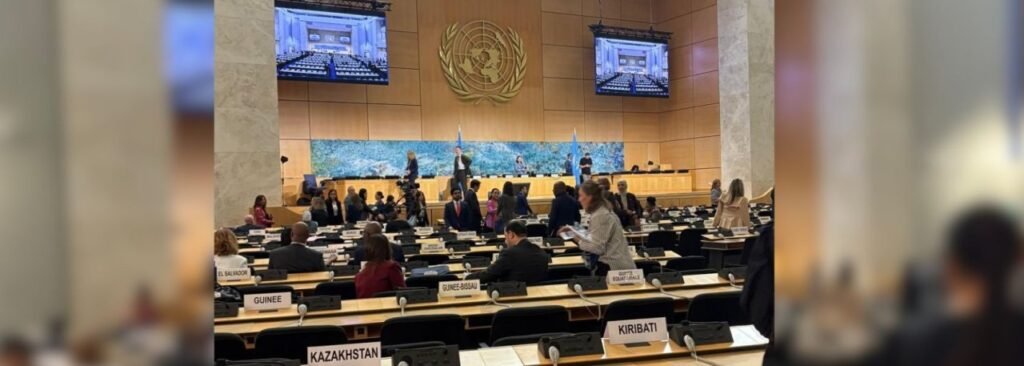
As the United Nations General Assembly Sixth Committee convenes in New York to discuss the Conference on crimes against humanity, the Coalition for a Crimes Against Humanity Convention (C-CAH) has issued a formal call for member and observer states to ensure inclusive, transparent, and non-discriminatory civil society participation in the treaty negotiations. The C-CAH, which includes the International Federation for Human Rights (FIDH) among its members, is urging states and the UN Secretariat to facilitate meaningful engagement from diverse, cross-regional civil society groups, including victims, survivors, non-governmental organizations, and academic institutions.
In a statement released on 12 October 2026, the coalition expressed full support for the progress achieved during previous Sixth Committee sessions and by the first Preparatory Committee. The signatories described the potential convention as a rare opportunity within a multilateral system often characterized by stalled progress, aiming to reshape global justice and reassert the rule of law. The group emphasized that the treaty must be effective, victim-centric, and non-discriminatory in its prevention and punishment mechanisms.
The coalition welcomed the first Preparatory Committee’s decision to extend participation rights in the future negotiating conference to engaged non-governmental organizations, civil society organizations, academic institutions, and private sector entities, even those lacking consultative status with the Economic and Social Council (ECOSOC). This extension was noted to be guided by principles of transparency, equitable geographical representation, and gender parity. However, the C-CAH stressed that this decision must be operationalized to ensure diverse civil society can participate effectively in both the ongoing work of the Preparatory Committee and the future conference.
Key demands include timely opportunities for stakeholders to submit participation requests, full rights to attend and address formal meetings, and the ability to receive and submit materials. The coalition further insisted that participants should be able to attend relevant meetings in person without undue restrictions regarding delegation size or number. Regarding state proposals for amendments to the Draft Articles, the coalition welcomed efforts aimed at strengthening protection for all persons from crimes against humanity, urging that these remain part of future negotiations.
Before the conference, states are urged to organize consultations on substantive issues as per UNGA Resolution 79/122, involving civil society and experts. Broad consultations with victims and survivors are also required to determine their priorities and preferred engagement methods, supported by adequate funding, assistance, accommodation, and outreach. The coalition called for an inclusive negotiation process that advances cross-regional civil society participation, ensures gender competence and parity, and reflects the intersectional experiences of victims. Additionally, they warned that if circumstances impede inclusive in-person participation in New York for all UN member and observer states, meetings should be moved to a venue outside the United States.
This report was produced by the HuMedia newsroom.