Reconstruction Without Safeguards
Amman – Human Rights Watch stated on Monday that the Syrian interim government is finalizing billions of dollars in reconstruction deals lacking a fundamental human rights framework. The organization argues that current agreements fail to guarantee that rebuilding efforts will respect, protect, and fulfill the rights of affected populations.
In March 2026, the interim government unveiled a national recovery plan, followed by international pledges totaling billions in aid, financing, and investment commitments. However, existing legal frameworks do not obligate the government or developers to consult with local communities, including those still displaced, before approving projects. The process also lacks mandatory negotiation for compensation terms and independent mechanisms for residents to challenge decisions regarding their homes and land.
Hiba Zeineddine, senior Middle East counselor at Human Rights Watch, emphasized that while reconstruction is proceeding slowly, it risks violating the rights of many Syrians without a proper legal structure. She noted that the ongoing completion of legal frameworks will determine whose homes are rebuilt, which claims are recognized, and whose voices are heard.
Field Research and Local Conditions
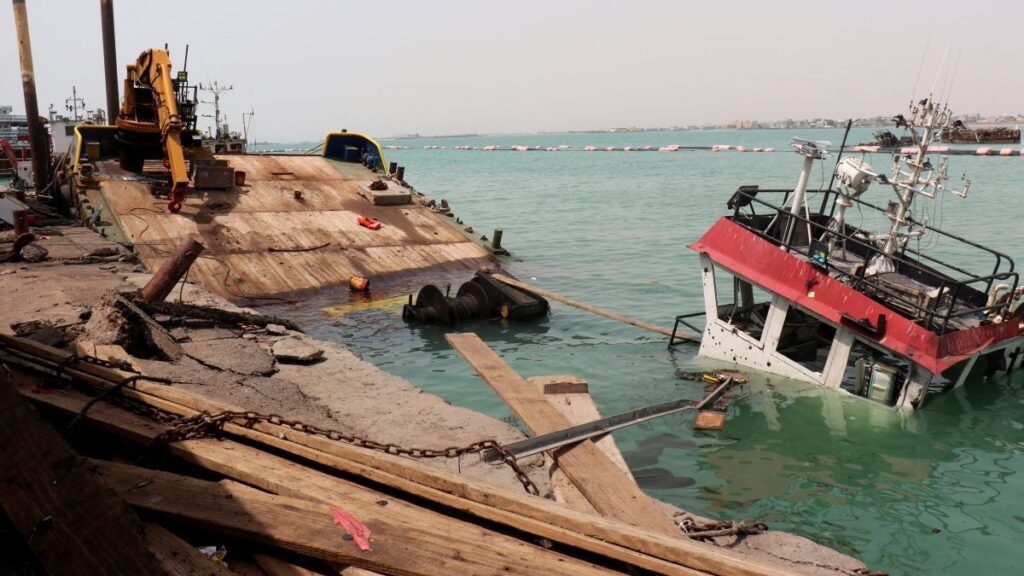
Human Rights Watch conducted field research in Syria in May 2026, interviewing residents of Ghadfa village in Idlib countryside who returned from displacement camps. These returnees reported finding destroyed homes and villages devoid of running water, electricity, adequate sewage systems, functioning schools, or nearby medical services. In Jobar, an eastern Damascus district, approximately 95% of buildings were destroyed according to Syria Report.
The research also included interviews with an activist, whose identity was withheld for safety reasons, demanding the cancellation of Decree 66 and the restoration of property rights in the Marota City project. Unresolved housing, land, and property claims from the Assad era remain a significant barrier to stable returns.
International Pledges vs. Reality
Syria emerges from over a decade of conflict causing widespread damage. In October 2025, the World Bank estimated physical damages at $108 billion and reconstruction costs between $140 billion and $345 billion. The interim government has moved quickly to attract investment, lifting sanctions imposed by the US and European nations.
Gulf states have led investments: Saudi Arabia pledged $6.4 billion in real estate, infrastructure, communications, and energy, while Qatar committed $4 billion. Qatar also settled $15.5 million in arrears to the World Bank in April 2025, allowing resumed engagement after a 14-year suspension. Dubai Ports Worldwide secured a 30-year concession to operate the Port of Tartus. The World Bank approved grants exceeding $1 billion, and the IMF established a technical cooperation program with Damascus.
European partners, particularly France and Germany, along with Italy, have been active. The EU pledged €620 million ($713 million) for humanitarian and socio-economic recovery for 2026-2027 and announced an investment conference for 2027.
Legal Obligations and Future Steps
Despite these pledges, the Institute for Global Governance noted in August 2026 that declarations far exceed actual on-the-ground investment. Disbursements will only begin once governance and legal frameworks are established. A July 2026 International Rescue Committee report indicated that over 3.5 million refugees and internally displaced persons returned since December 2024, though many returns were not fully voluntary due to deteriorating camp conditions and high rental costs.
Syria is bound by the International Covenant on Economic, Social and Cultural Rights and the International Covenant on Civil and Political Rights, which guarantee the right to adequate housing and effective remedy. UN guidelines on eviction and internal displacement require consultation, compensation, and due process. Zeineddine concluded that this is a critical opportunity for the international community and the interim government to build safeguards ensuring sustainable recovery aligned with human rights.
This report was produced by the HuMedia newsroom.