(Istanbul, 13 October 2026) – Human Rights Watch stated today that authorities in Turkey, the host nation for the upcoming United Nations Climate Change Conference (COP31), are arbitrarily detaining activists and other participants in environmental protests while pursuing legal action against them as the summit approaches.
Deniz Bayram, a researcher in the Europe and Central Asia Division at Human Rights Watch, emphasized that Turkey’s repressive campaign against environmental defenders serves as a stark reminder of its intolerance toward opposition. She noted that while Turkey prepares to host the annual UN climate summit, the government should listen to people’s concerns regarding the environmental impact of activities such as mining in their areas and address them, rather than arresting protesters and subjecting them to prosecution.
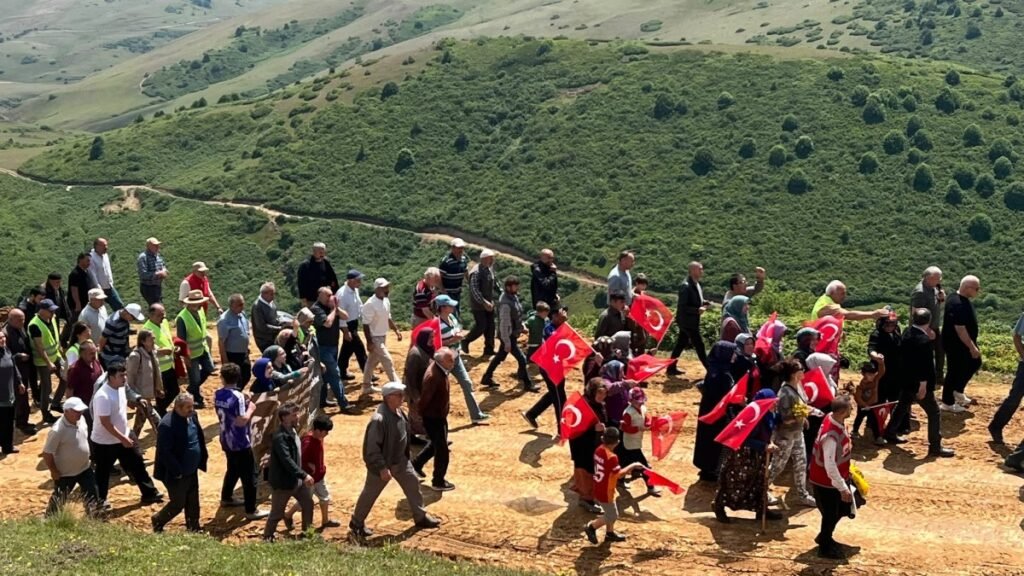
In August 2026, Human Rights Watch met with twenty-three individuals who participated in environmental protests and reviewed relevant media reports, documents, and legal proceedings. The organization also documented the treatment of environmental protesters in two currently affected regions. Protests against coal mining in the Akbelen Forest in Mugla province in southwestern Turkey have continued since 2023, while gold exploration operations on the Berishimpe plateau and surrounding areas in the Black Sea region sparked protests throughout 2026.
Authorities in both regions used force to disperse peaceful demonstrations, employing tactics such as tear gas, water cannons, and pepper spray. Police arrested protesters, imposed fines, and intimidated local residents through arbitrary identity checks. In September, Human Rights Watch wrote to the Ministry of Interior, the prosecutor’s office in Milas in Mugla, the prosecutor’s office in Korgan in Ordu, and the prosecutor’s office in Tirebolu in Giresun, requesting additional information and responses to the findings. None had responded by the time this statement was issued.
Police and security forces arrested members of the local community, lawyers, and journalists during the protests. Protesters face various criminal charges and investigations based on dubious allegations, including illegal assembly, using violence to prevent a public official from performing their duties, trespassing on private property, insulting public officials, and spreading false information. Authorities also temporarily detained at least two individuals who expressed support for the protests online.
In one instance on July 29, authorities detained protesters in the Black Sea region for up to eight hours without following due process. Among those detained were two children and an eighty-four-year-old woman. Environmental defenders also faced criminal charges, administrative fines, and other legal pressures for documenting environmental damage or seeking to protect their lands and environment.
Before the North Atlantic Treaty Organization (NATO) summit in Ankara in July, authorities ordered the arrest of 225 individuals, ranging from political activists to nature conservation supporters, suspected of “membership in armed organizations.” On June 25 and 26, courts ordered the detention of 178 of them pending trial and placed thirty-four under house arrest with judicial supervision, without relying on convincing evidence of criminal activity. Thirteen members of a nature protection organization among the detainees were later released, along with fourteen others who had been under house arrest.
The ongoing criminal investigations and arrests of environmental protesters since 2023 have had a significant chilling effect on the right to freedom of expression and assembly, protected under international human rights law and the Turkish Constitution. Many cases ended with non-prosecution decisions or acquittals, but the investigations impose a heavy burden on those targeted, lasting years and requiring repeated appearances before security agencies.
In May 2024, a seventy-five-year-old woman in Denizli, western Turkey, was fined after refusing to allow two mining company employees onto her property in protest of coal mining. She was accused of assaulting the employees, allegations she strongly denies. The decision is under appeal.
Police and gendarmerie prevented journalists and passersby from photographing environmental protests in affected areas, using violence in some instances, and arrested journalists covering the protests, opening investigations against them, according to media reports.
Human Rights Watch has previously raised concerns with Turkish authorities that efforts to expand coal mining and coal-fired power generation capacity in Turkey pose serious risks to public health, environmental protection, and other human rights. The organization stated that the suppression of environmental defenders is part of a broader attack on civic space in the country, including the detention of activists in Istanbul who were protesting a crackdown on the LGBTQ+ community on September 15, 2026. Some reported mistreatment during their detention, which exceeded twenty-four hours.
Human Rights Watch stressed that civil society participation is crucial for holding states accountable for their environmental policies and is essential in contexts where central government decisions can have severe local environmental impacts. As the host of COP31 in November, Turkey is obligated to facilitate civil society participation in the conference.
Bayram concluded: “The Turkish government has ignored environmental protection measures and turned against locals raising their voices against environmental damage inflicted on their communities. Countries participating in COP31 should condemn Turkey’s repressive campaign against environmental defenders and remind the host state that civil society participation is vital to achieving COP goals.”
This report was produced by the HuMedia newsroom.